Dynamic OG images
Design one template, and every page on your site gets its own preview image. The URL itself is the og:image, so there is no image pipeline to build or maintain.
Free, no signup. The preview you see is the PNG you download.
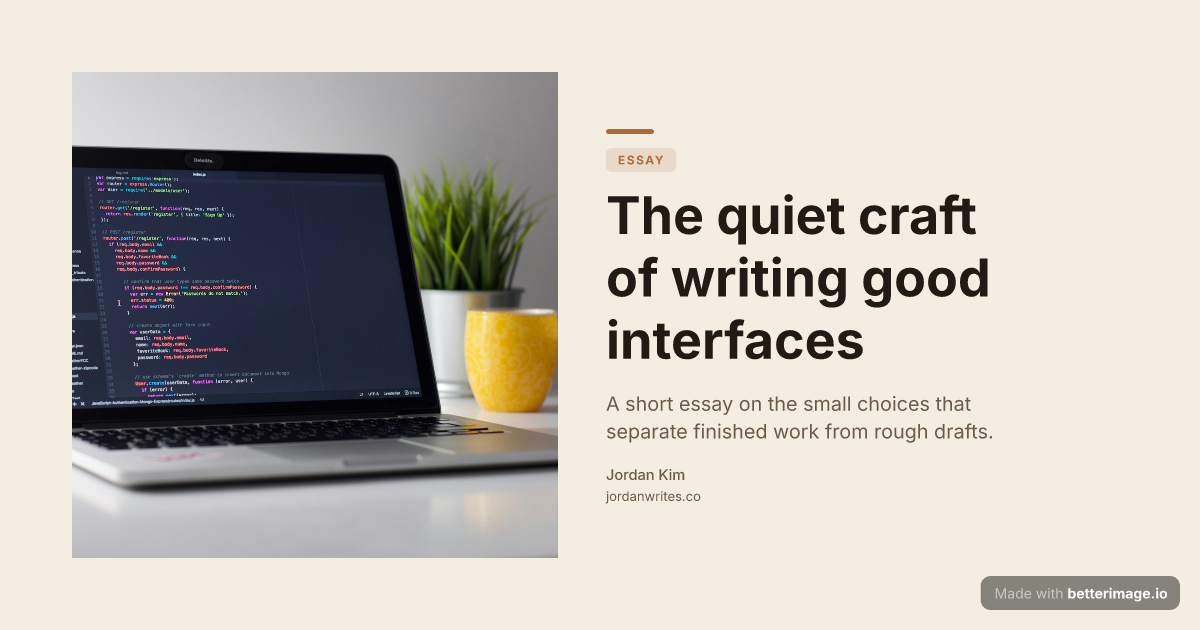
Editorial blog post
Serif headline, photo bleeding from the left edge, warm cream palette.
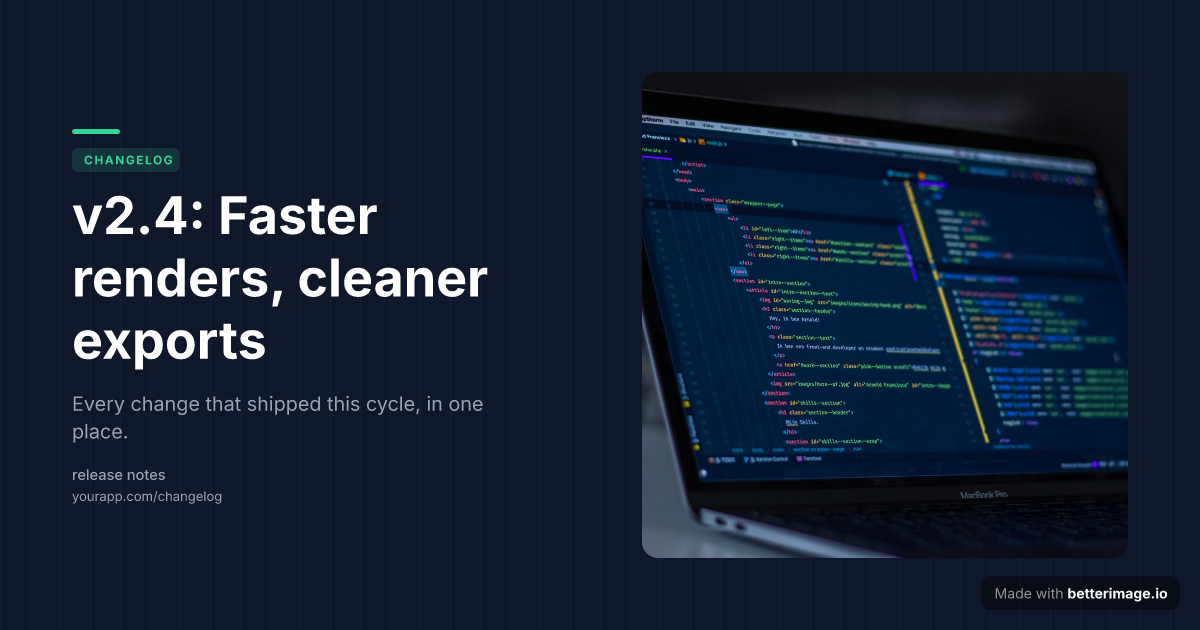
Release notes
Version headline in monospace with a code screenshot. For changelogs and release posts.
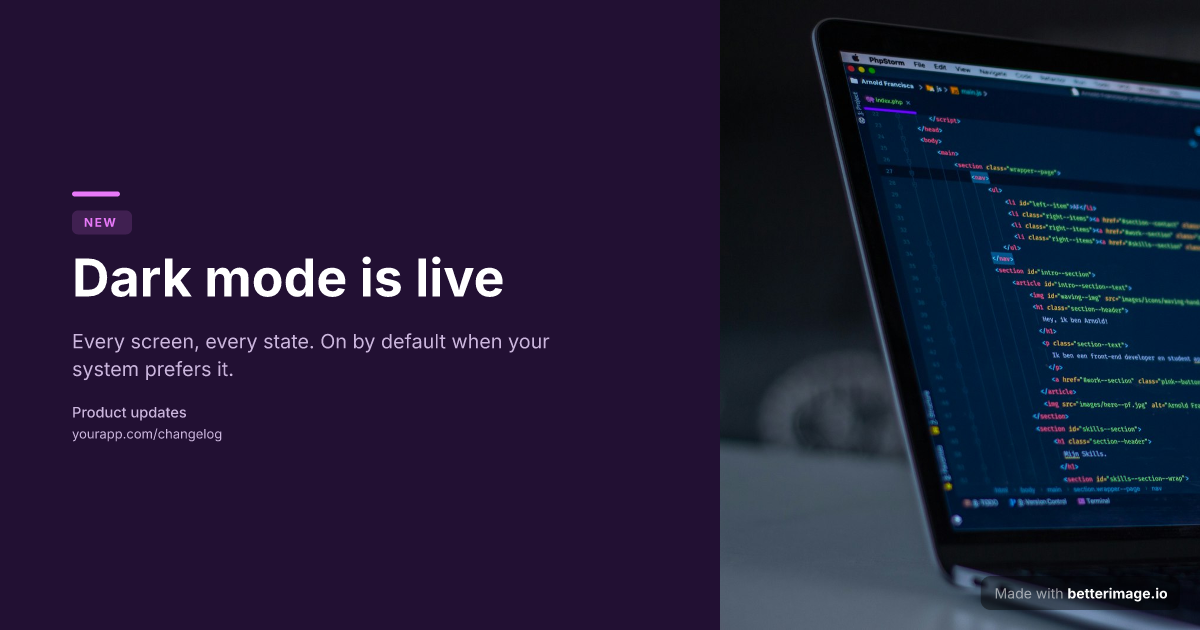
Feature update
Feature headline with a screenshot on the right and a NEW tag. For product updates.
Click any example to open it in the editor and make it yours. More starting points in the template gallery.
A static og:image works for a homepage, but a blog, changelog, or docs site wants a unique preview per page, with the page's own title on it. The usual fix is a screenshot service or an image step in your build pipeline: one more thing that breaks, and a rebuild every time the design changes.
Here it works differently. Design the card once in the editor and save it as a template. Then compose an image URL with your page's text in the query string and put it straight into the og:image tag. When a crawler fetches it, the image renders on the fly with that page's title, in tens of milliseconds.
How it works
Pick a template
Start from an example above or from a blank template in the editor.
Make it yours
Type your text, set colors, fonts, and layout, upload a photo or logo. The preview updates as you type.
Download the PNG
Free with a small corner mark, or $4.99 once for the clean file. No subscription.
The URL is the image
There is no upload step and no stored file per page. Each URL carries the per-page fields (title, description, tag, author, footer, rating, and the output size) and an HMAC signature computed with your API key's secret, so nobody can alter your design or free-ride on your quota by editing the query string.
<meta property="og:image"
  content="https://betterimage.io/api/v1/i/KEY_ID/blog-post.png?title=Your+post+title&s=SIGNATURE" />
No backend, no rebuilds
Tweak the template in the editor and every page's preview updates on the next crawl; there is nothing to redeploy. Rendered images are served with long-lived cache headers, so repeat fetches of the same URL come from the CDN edge instead of rendering again.
Works with any stack
It is one meta tag, so it works the same in WordPress, Next.js, Hugo, Rails, or hand-written HTML. If you prefer to generate files ahead of time instead, the same templates render over a REST endpoint and you store the PNGs wherever you like.
The same design covers the rest of the funnel too. Pairs well with: OG image generator · Release notes image · Link preview image
Frequently asked questions
What are dynamic OG images?
Open Graph images generated per page from a template instead of designed one by one: the layout and branding stay fixed while the title and other text come from each page. Link previews then always match the content behind them.
Do I need a backend or a build step?
No. The image URL renders on request, so a static site or a no-code page gets per-page previews with a single meta tag. There is nothing to rebuild when the design changes.
What can change per URL?
The title, description, tag, author, footer, star rating, and the output size. Everything else (layout, colors, fonts, images) stays locked to the template you designed.
Is there a free tier?
Yes. The API's free tier renders a monthly allowance of watermarked images at no cost, enough to integrate and evaluate. Paid plans remove the watermark and raise the quota; details are on the API page.
Can someone tamper with my image URLs?
No. Every parameter is covered by an HMAC signature computed with your key's secret. Changing anything in the URL invalidates the signature and the request is rejected.
More generators
Make yours now
The editor is free and runs in the browser, no signup. The free download carries a small "Made with betterimage.io" mark; a one-time $4.99 payment removes it from every platform size of the design, no subscription required. For automated generation there is an API plan at $9/month.
Open the editor